Indian Recipes
source(google.com)Indian cuisine encompasses a wide variety of regional and traditional cuisines native to India. Given the range of diversity in soil type, climate, culture, ethnic group and occupations, these cuisines vary significantly from each other and use locally available spices, herbs, vegetables and fruits. Indian food is also heavily influenced by religious and cultural choices and traditions.[1] There has also been Middle Eastern and Central Asian influence on North Indian cuisine from the years of Mughal rule.[2] Indian cuisine has been and is still evolving, as a result of the nation's cultural interactions with other societies.[3][4]
Historical incidents such as foreign invasions, trade relations and colonialism have also played a role in introducing certain foods to the country. For instance, the potato, a staple of the diet in some regions of India, was brought to India by the Portuguese, who also introduced chillies and breadfruit.[5] Indian cuisine has also shaped the history of international relations; the spice trade between India and Europe is often cited by historians as the primary catalyst for Europe's Age of Discovery.[6] Spices were bought from India and traded around Europe and Asia. It has also influenced other cuisines across the world, especially those from Middle East, North Africa, Sub-Saharan Africa, Southeast Asia, the British Isles, Fiji, and the Caribbean.
The cuisine of Andhra Pradesh belongs to the two Telugu-speaking regions of Rayalaseema and Coastal Andhra and is part of Telugu cuisine. The food of Andhra Pradesh is known for its heavy use of spices and, similar to South Indian cuisine, the use of tamarind. Seafood is common in the coastal region of the state. Rice is the staple food (as is with all South Indian states) eaten with lentil preparations like Pappu (dal) and Pulusu (Stew) and spicy vegetables or curries. In Andhra, leafy greens or vegetables like bottle-gourd and eggplant are usually added to dal. Pickles are an essential part of the local cuisine; popular among those are mango-based pickles like avakaya and maagaya, gongura (a pickle made from red sorrel leaves).,[29] usirikaya (gooseberry or amla), nimmakaya (lime) and tomato pickle. Yogurt is a common addition to meals, as a way of tempering spiciness. Breakfast items include dosa, pesarattu (mung bean dosa), vada, and idli.
Arunachal Pradesh
Main article: Cuisine of Arunachal Pradesh
The staple food of Arunachal Pradesh is rice, along with fish, meat and leaf vegetables.[30] Many varieties of rice are used. Lettuce is the most common vegetable, usually prepared by boiling with ginger, coriander and green chillies.[31] Boiled rice cakes wrapped in leaves are a popular snack. Thukpa is a kind of noodle soup common among the Monpa tribe of the region.[32] Native tribes of Arunachal are meat eaters and use fish, eggs, beef, chicken, pork and mutton to make their dishes. Apong or rice beer made from fermented rice or millet is a popular beverage in Arunachal Pradesh and is consumed as a refreshing drink.[33]
Assamese Thali
Bihar
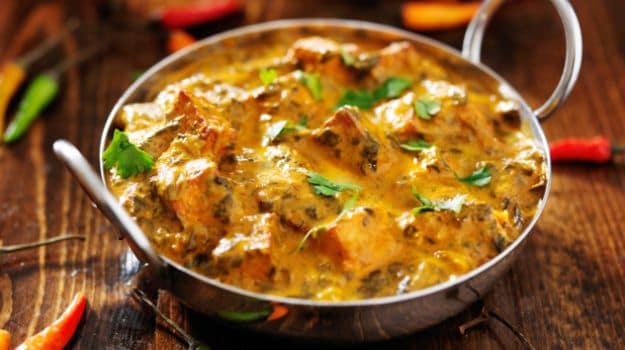
spinach and paneer (cottage cheese)Chandigarh
Chandigarh, the capital of Punjab and Haryana is a city of 20th century origin with a cosmopolitan food culture mainly involving North Indian cuisine.People enjoy home-made recipes such as Paratha, especially at breakfast, and other Punjabi foods like Roti made from corn flour (Makki) with Sarson da saag. Dal makhani is well known dish among others.[39] Popular snacks include Gol Gappa (known as Panipuri in other places). It consists of a round, hollow puri, fried crisp and filled with a mixture of flavoured water among other ingredients.
Chhattisgarh
Chhattisgarh cuisine uses many foods not found in the rest of India, although the staple food is rice, like in much of the country. Many Chhattisgarhi people drink liquor brewed from the Mahuwa flower.[40] The tribal people of the Bastar region of Chhattisgarh eat whatever is available: Baasi(left over rice), mushrooms, bamboo pickle, bamboo vegetables, etc.[41][42]Dadra and Nagar Haveli
The local cuisine shows resemblances with the cuisine of Gujarat. Ubadiyu is a local delicacy made up of vegetables and beans with herbs. The common foods include rice, roti, vegetables, river fishes and crab. People also enjoy buttermilk and chutney made up of different fruits and herbs.
Indian Recipes

Indian Recipes

Indian Recipes
Indian Recipes

Indian Recipes

Indian Recipes

Indian Recipes

Indian Recipes

Indian Recipes

Indian Recipes

Indian Recipes
Indian Recipes

Indian Recipes
Indian Recipes

Indian Recipes

Indian Recipes

Indian Recipes
Indian Recipes

Indian Recipes

No comments:
Post a Comment